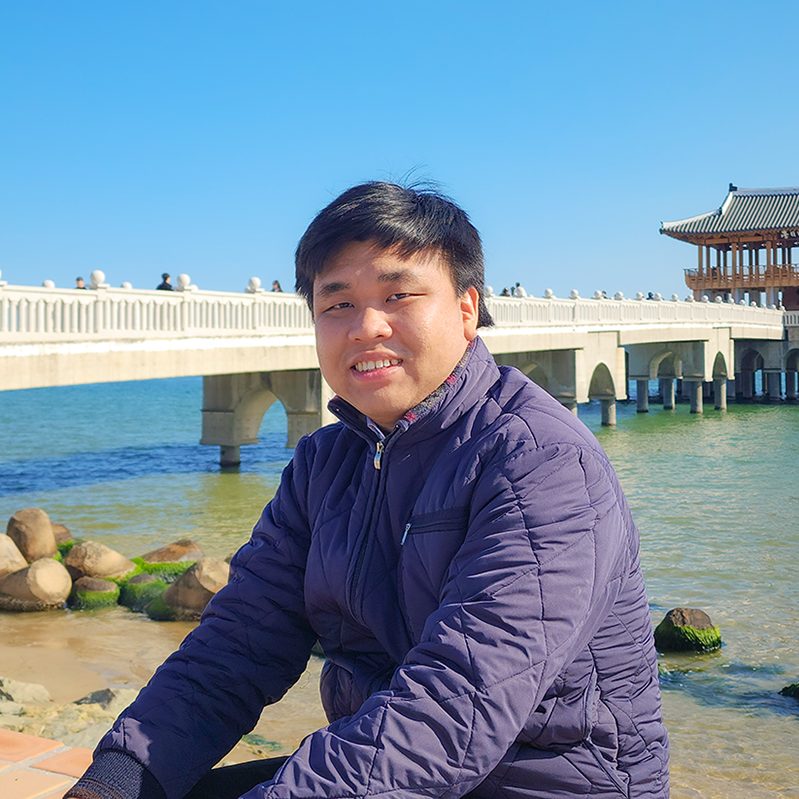

Thi Huynh Ho, Ph. D.
Contact Information
 Address: Bldg A.153, 69/68 Dang Thuy Tram St., Binh Loi Trung Ward, Ho Chi Minh City, Vietnam
 Phone: (+84) 396169094
 Email 1: thi.hohuynh@vlu.edu.vn
Email 2: thiho1301@gmail.com
Links: 





Welcome to my personal page!
Let me introduce myself. I am Thi Huynh Ho, a young researcher with a background in materials science and computational physics. I received my B.S. degree in Materials Science from Ho Chi Minh City University of Science, Vietnam in 2016. Following this, I pursued a combined M.Sc. and Ph.D. degree in Computational Physics at the University of Ulsan, South Korea, which I completed in 2023. Currently, I am a full-time researcher, and head of Laboratory for Computational Physics, Institute for Computational Science and Artificial Intelligence at Van Lang University, Vietnam.
My research interests lie in the fascinating fields of magnetic properties and spin-orbital related phenomena in thin films and superlattices. Additionally, I am deeply engaged in studying the reaction dynamics of metal surfaces for photo/electrocatalysis using density functional theory (DFT) methods. My work aims to uncover new insights and contribute to the advancement of magnetism and sustainable energy solutions.
Throughout my academic journey, I have developed a robust skill set in computational modeling, data analysis, and scientific programming. I am passionate about leveraging these skills to explore complex physical phenomena and drive innovation in materials science.
Thank you for visiting my page, and I look forward to connecting with fellow researchers and enthusiasts in the field.
My Reasearch Interests
1. Computational Physics of Condensed Matters
- Magnetism in novel structures
- Spin and orbital response phenomena in solids
- Thin films and superlattices
- Magnetic anisotropy
2. Reaction Dynamics in Chemistry
- Molecular dynamics
- Reaction pathways
- Potential energy surface
- Charge transfer
3. Programing
- MATLAB
- FORTRAN & C
- Python
- Parallel computing (MPI)
- Visualization
4. Machine Learning
- TensorFlow
- Scikit-learn
- Neural Network